
 Image 1 of 1
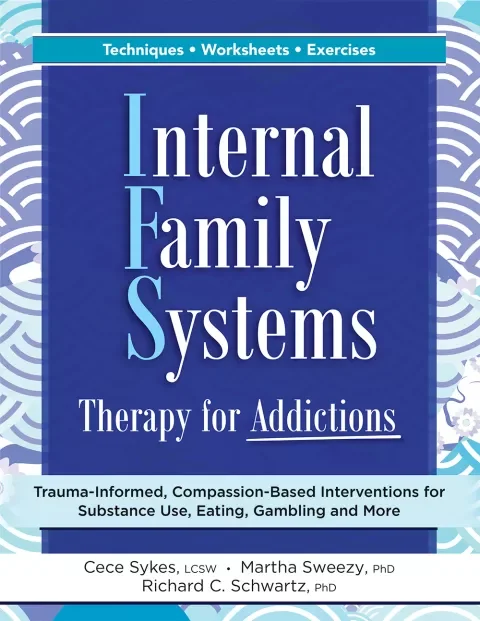
Trauma-informed, Compassion-Based Interventions for Substance Use, Eating, Gambling and More
Too often, addiction is seen as either a disease or an uncontrollable habit that reflects a lack of willpower. In Internal Family Systems (IFS) Therapy for Addictions, IFS educator Cece Skyes, IFS author Martha Sweezy, and IFS founder Richard Schwartz invite a meaningful shift in perspective. Rather than framing addiction as a pathology, they view it as the behavior of polarized parts attempting to manage deep emotional pain.
In this guide, therapists learn how to access their core, compassionate Self and work collaboratively with clients to befriend the protective parts involved in addictive behaviors, heal the vulnerable parts these protect, and restore balance within the internal system.
Inside, you’ll find:
Experiential exercises to help clients and therapists become familiar with their internal parts
Guidelines for conducting assessments in a collaborative, engaging manner
Practical strategies for resolving internal conflict and navigating polarization between opposing parts
Detailed case examples with step-by-step explanations
Downloadable worksheets, handouts, and guided meditations
Trauma-informed, Compassion-Based Interventions for Substance Use, Eating, Gambling and More
Too often, addiction is seen as either a disease or an uncontrollable habit that reflects a lack of willpower. In Internal Family Systems (IFS) Therapy for Addictions, IFS educator Cece Skyes, IFS author Martha Sweezy, and IFS founder Richard Schwartz invite a meaningful shift in perspective. Rather than framing addiction as a pathology, they view it as the behavior of polarized parts attempting to manage deep emotional pain.
In this guide, therapists learn how to access their core, compassionate Self and work collaboratively with clients to befriend the protective parts involved in addictive behaviors, heal the vulnerable parts these protect, and restore balance within the internal system.
Inside, you’ll find:
Experiential exercises to help clients and therapists become familiar with their internal parts
Guidelines for conducting assessments in a collaborative, engaging manner
Practical strategies for resolving internal conflict and navigating polarization between opposing parts
Detailed case examples with step-by-step explanations
Downloadable worksheets, handouts, and guided meditations